How to Brew Green Tea: Perfect Temperature, Steep Time, and Easy Steps
A practical guide to temperature, time, and technique
Green tea can taste fresh, sweet, grassy, floral, nutty, or deeply savory. Too much heat or time can make it sharply bitter. The difference often comes down to water temperature, steeping time, and the amount of tea used.
For most everyday leaves, a reliable starting point is 2 grams of tea per 8 fluid ounces (240 milliliters) of water, brewed at 170-175°F (77-80°C) for about 2 minutes. That is a starting point rather than an unbreakable rule. A delicate Japanese tea may prefer cooler water, while a tightly rolled Chinese tea may need a little more heat or time. This guide explains how to prepare green tea in hot, iced, and refrigerated forms. Once the basic method is understood, a home brewer can adjust one variable at a time and quickly find a favorite cup.These ranges suit many teas, but the producer’s directions should take priority when they are available.
Quick Green Tea Brewing Guide
Brewing method | Tea amount | Water | Time |
Everyday loose leaf | 2 g or about 1 level teaspoon per 8 fl oz | 170-175°F / 77-80°C | About 2 minutes |
Green tea bag | 1 bag per 8 fl oz | 170-175°F / 77-80°C | 1-3 minutes |
Iced concentrate | 4 g or 2 bags per 8 fl oz hot water, then add ice | 170-175°F / 77-80°C | 2-3 minutes |
Cold brew | 8-10 g per 34 fl oz / 1 liter | Cold filtered water | 4-8 hours in the refrigerator |
These ranges suit many teas, but the producer’s directions should take priority when they are available.
What Is Needed to Brew Green Tea?
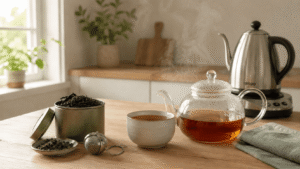
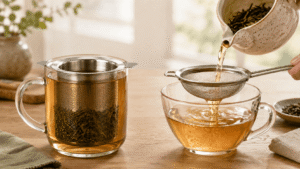
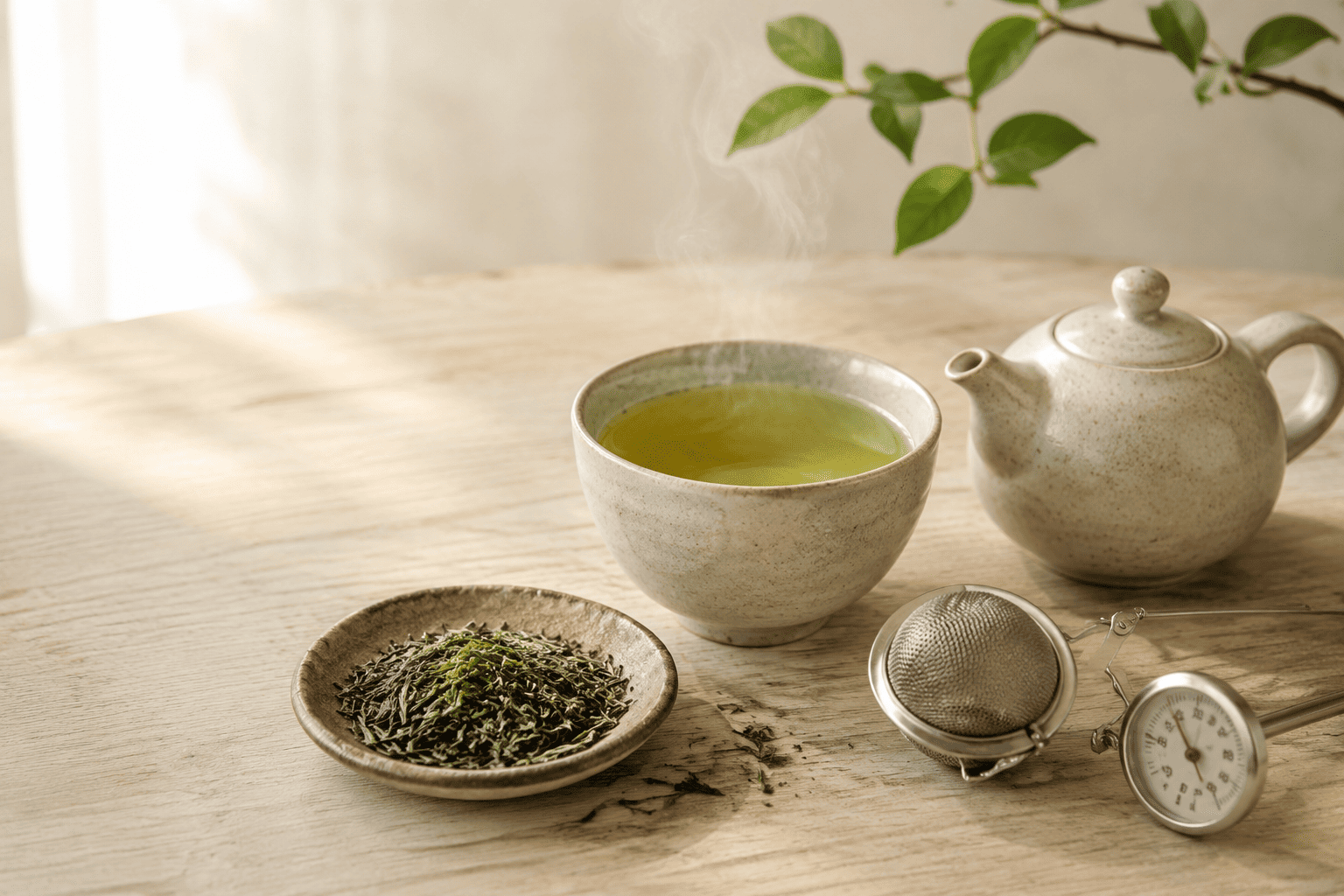
The basic setup is pleasantly simple. It requires fresh tea leaves or a tea bag, filtered water, a kettle, a cup or teapot, and a way to separate the leaves from the finished drink. A roomy basket infuser is especially helpful for loose green tea because compressed leaves need space to open.
A thermometer removes guesswork. A scale improves consistency because dense rolled tea can weigh far more than fluffy leaves by volume; without one, a level teaspoon per cup is a practical start.
Why Green Tea Needs Gentler Brewing
Green, black, and oolong teas come from the same plant, Camellia sinensis, but green leaves are heated soon after harvest to limit oxidation.[1] That processing preserves a fresher flavor profile, yet it also means many green styles are less forgiving of aggressive brewing.
Hotter water and longer contact generally pull more material from the leaf, including caffeine and
catechins.[2][3] More extraction is not automatically a better cup. It can bring useful body and aroma, but it can also emphasize astringency and bitterness. Cooler water tends to produce a softer, sweeter infusion, while warmer water gives a brisker, stronger one. The ideal green tea temperature, or best water temp for green tea, depends on the leaf and the drinker’s preferred flavor.
How to Brew Green Tea Step by Step
1. Start With Fresh Water
Filtered water is usually the safest choice because strong chlorine or heavy mineral flavors can cover the tea’s aroma. Water that has been boiled repeatedly may also taste flat. The brewer should begin with a fresh measure and heat only what is needed.
2. Heat the Water Below a Full Boil
For a general cup, the kettle should stop around 170-175°F (77-80°C). A temperature-controlled kettle makes this easy. Without one, freshly boiled water can be poured into a cool cup and allowed to stand for several minutes before it meets the leaves.
Transferring hot water between vessels also lowers its temperature; ITO EN notes that one transfer into a cup can reduce it by roughly 10°C.[4] Boiling water is not forbidden in every case. Roasted or hearty styles can handle it, and some drinkers enjoy a more assertive brew. For delicate leaves, however, starting cooler gives the brewer more control.
3. Warm the Cup or Teapot
Preheating is optional but helpful. A small splash of hot water can be swirled around the brewing vessel and discarded. This prevents a cold pot from dropping the brewing temperature too quickly and makes one batch easier to repeat.
4. Measure the Tea
A balanced green tea to water ratio is about 2 grams per 8 fluid ounces. A stronger drink is usually better made with a little more leaf, not a much longer steep. Extra leaf increases flavor while reducing the risk of drawing out a harsh finish. When preparing a larger pot, the ratio should be scaled rather than guessed. A 24-ounce teapot, for example, starts with about 6 grams of leaves. One standard bag normally suits one 8-ounce cup unless its packaging says otherwise.
5. Pour and Cover
The water should reach all the leaves evenly. A lid helps retain heat and aroma, but the leaves still need room to circulate. A cramped tea ball can prevent larger leaves from opening, producing a thin drink even when enough tea was measured.
6. Steep for About Two Minutes
Advice about how long to steep tea varies by style. How long to steep green tea specifically depends on leaf size, origin, and processing, but 2 minutes is a sensible first trial. Fine particles and broken leaves infuse quickly, so a tea bag may be ready after 1 minute.
Whole or tightly rolled leaves may need closer to 3 minutes. Timing should begin as soon as the water touches the tea. The brewer can taste at the lower end of the range and add 15-30 seconds when the flavor seems weak. If the cup is bitter, the next attempt should use cooler water or a shorter time rather than adding sweetener immediately.
7. Remove or Decant All the Leaves
Once steeping is complete, the infuser or bag should be removed. In a teapot, every drop should be poured out so the leaves do not continue brewing in a shallow pool. This small habit improves the first cup and protects later infusions from becoming overly strong.
8. Taste Before Adding Anything
The finished liquor may range from pale gold to bright yellow-green or cloudy jade. Green tea color is shaped by the cultivar, processing, leaf particles, and brewing method, so a vivid emerald cup is not a universal quality test. A first taste without milk, sugar, or lemon reveals whether the temperature and timing need adjustment.
Temperature and Steeping Time by Tea Type
Type | Starting temperature | Starting time | Useful note |
Sencha | 160-175°F / 70-80°C | 1-2 minutes | Cooler water highlights sweetness and umami. |
Dragon Well (Longjing) | 175°F / 80°C | 2 minutes | A glass or roomy infuser lets the flat leaves open. |
Jasmine green tea | 170-175°F / 77-80°C | 2-3 minutes | Excess heat can hide the floral aroma behind bitterness. |
Gunpowder green | 175-180°F / 80-82°C | 2-3 minutes | Rolled pellets need room to unfurl. |
Gyokuro | 122-149°F / 50-65°C | About 2 minutes | A traditional brew uses more leaf, less water, and very gentle heat.[5] |
Genmaicha | 175-195°F / 80-90°C | 30 seconds-2 minutes | Warmer water brings out its toasted rice aroma. |
Matcha | 158-176°F / 70-80°C | Whisk, do not steep | About 1.5-2 g is whisked with 2-3 fl oz of water. |
These numbers are calibration points, not quality grades. The same sencha can taste mellow at 160°F and brisk at 175°F. A practical matcha water temp falls between 158°F and 176°F. Matcha is the important exception in the table: because the powdered leaf remains in the bowl, the method is whisking rather than steeping.
Loose-Leaf Tea Versus Tea Bags
Both formats can produce an enjoyable cup. Loose leaves often offer more control over dose and more room for whole leaves to expand. Bags are faster, consistent, and convenient. Because bagged tea usually contains smaller particles, it releases flavor quickly and often needs a shorter infusion.
For anyone learning how to brew green tea bags, the simplest method is one bag per 8-ounce cup at 170-175°F for 1-3 minutes. The bag should be lifted out without hard squeezing. A gentle drip is fine, but pressing can push additional fine particles and astringent liquid into the cup.
How to Make Iced Green Tea
Hot-brewed iced tea should begin as a concentrate so melting ice does not leave it watery. For two 8-ounce servings, a brewer can steep 4 grams of leaves or two bags in 8 ounces of 170-175°F water for 2-3 minutes. After the leaves are removed, the hot concentrate is poured over roughly 8 ounces of ice. If the drink will be sweetened, sugar or honey dissolves most easily while the concentrate is still warm. Citrus, mint, peach, or sliced berries can be added lightly, but clean tea flavor should remain the center of the recipe.
How to Cold Brew Green Tea
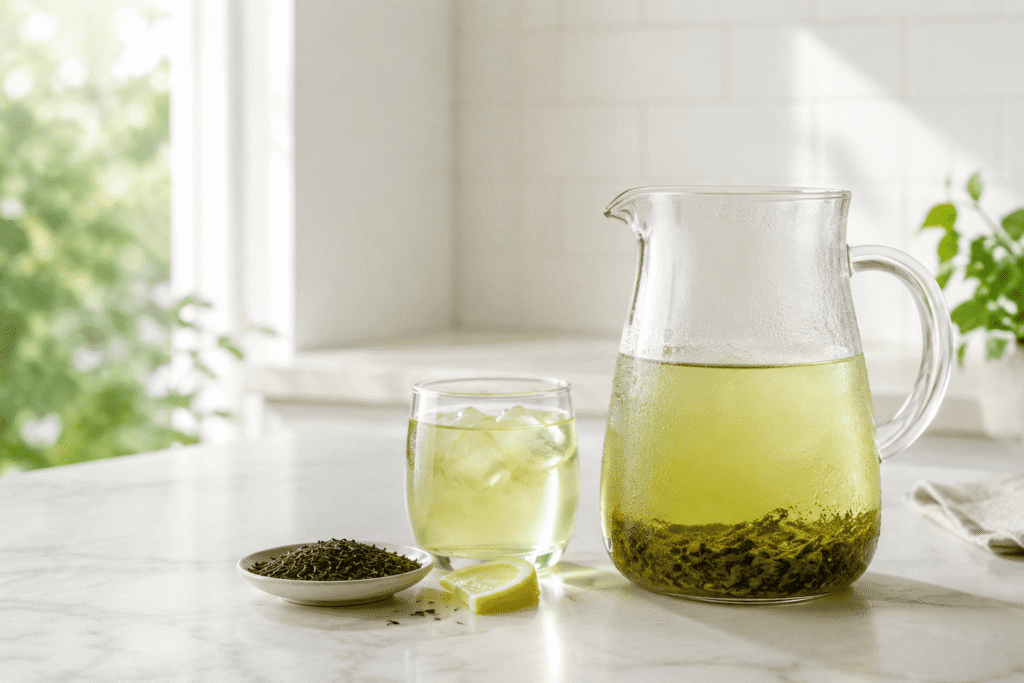
Cold brew green tea is smooth, refreshing, and difficult to oversteep. A clean pitcher should receive 8-10 grams of leaves per liter of cold filtered water. The covered pitcher then rests in the refrigerator for 4-8 hours before the leaves are strained. Fine Japanese leaves may finish earlier, while large whole leaves can take longer. Cold extraction proceeds more slowly than hot extraction.
Research on bagged teas found that caffeine and catechins increased as cold-steeping time increased, but extraction was slower than with hot water.[3] That makes time the main control. The tea should be brewed in the refrigerator rather than in direct sun, kept chilled, and made in a quantity that will be enjoyed while fresh.
Can Green Tea Leaves Be Re-Steeped?
Many whole leaves can be infused two or three times. The first steep usually reveals the sweetest or most aromatic notes; later cups may become lighter, brisker, or more vegetal. For the second infusion, the brewer can use slightly warmer water and a shorter time, often 20-60 seconds. The leaves should be drained fully between rounds and re-steeped during the same session rather than left wet for hours.
Tea bags can be reused, but their small particles often give up most of their flavor in the first cup.
How to Make Green Tea Taste Better
Most flavor problems can be corrected without covering the tea. When green tea tastes bitter, temperature and time should be checked before anything is added.
- Bitter or drying: The water was probably too hot, the steep too long, or the dose too large. Cooler water is the first adjustment.
- Weak or watery: More leaf should be added before the time is extended. A larger infuser may also help the leaves open.
- Flat or dull: Fresh filtered water and properly stored leaves usually improve the aroma. Tea should be protected from heat, moisture, light, oxygen, and strong odors.
- Too grassy: A slightly shorter steep or a warmer, nuttier Chinese green style may suit the drinker better.
- Too plain: A small amount of mint, ginger, lemon, honey, or fruit can add interest. One addition at a time keeps the drink balanced.
Common mistakes include pouring a rolling boil over delicate leaves, forgetting the timer, squeezing a tea bag, and leaving brewed leaves in the pot. Another is changing temperature, dose, and time all at once. Adjusting a single variable makes it clear what actually improved the cup.
Green Tea, Caffeine, and Health Claims
Green tea naturally contains caffeine, but the amount is not fixed. One analysis of commercial brewed teas found 14-61 milligrams per 6- or 8-ounce serving, with wide variation among products and brewing conditions.[6] Hotter water, longer contact, smaller particles, and more leaf can all affect the finished cup. The FDA says that, for most adults, 400 milligrams of caffeine per day is an amount not generally associated with negative effects, although personal sensitivity varies.[7]
The drink also contains catechins and other polyphenols, but claims about green tea benefits should not turn laboratory measurements into medical promises. The U.S. National Center for Complementary and Integrative Health says firm conclusions have not been reached for most promoted uses of green tea. It reports no safety concerns for the beverage in adults while noting its caffeine content; concentrated extracts are different products and carry additional interaction and safety concerns.[1]
Frequently Asked Questions
Does Green Tea Have Caffeine?
Yes. The amount varies with the product, leaf quantity, particle size, water temperature, and brewing time. Anyone who is caffeine-sensitive can begin with a smaller serving, a shorter infusion, or a decaffeinated product and consider caffeine from all other daily sources.
Is Green Tea Good for You?
Unsweetened tea can fit comfortably into many eating patterns, but it is not a treatment or a shortcut to better health. Evidence for specific disease-prevention claims remains mixed, and concentrated supplements should not be treated as equivalent to a brewed beverage.[1]
Can Green Tea Be Made With Boiling Water?
It can, but delicate leaves may become bitter quickly. A lower starting range of 160-180°F gives most home brewers a wider margin for error. Hearty bancha, genmaicha, or roasted styles can tolerate hotter water.
How Long Should a Green Tea Bag Steep?
Most bags need 1-3 minutes. Since the fine leaf particles infuse rapidly, tasting at 1 minute is sensible. The bag can remain a little longer when the cup is too light, but it should not be forgotten in the water.
Is a Longer Steep Better for Health Benefits?
Longer and hotter extraction can increase some compounds in the cup, yet it can also produce unpleasant bitterness, and a higher laboratory extraction does not prove a greater health effect. Flavor, regular enjoyment, caffeine tolerance, and credible medical guidance matter more than chasing the longest possible infusion.
What Is the Best Way to Brew Tea Without a Thermometer?
The boiled water can rest for several minutes or be transferred into another cup before brewing. Delicate tea is better started slightly too cool than far too hot; extra time can strengthen a cool brew, while bitterness is harder to reverse.
Can Brewed Green Tea Be Served Cold?
Yes. It can be brewed hot and poured over ice, cooled in the refrigerator, or extracted from the beginning with cold water. Each method changes the balance: flash-chilled tea is brighter, while refrigerated cold brew is usually softer.
A Better Cup Starts With One Small Adjustment
Good technique is repeatable, not complicated. A home brewer can begin with 2 grams of tea, 8 ounces of water at 170-175°F, and a 2-minute timer. If the result is harsh, the water can be cooled; if it is thin, a little more leaf can be used. That single-variable approach turns steeping green tea from guesswork into a pleasant daily ritual and lets the character of each leaf come through.
Sources
- National Center for Complementary and Integrative Health. “Green Tea: Usefulness and Safety.” Source
- Saklar, S., Ertas, E., Ozdemir, I. S., and Karadeniz, B. “Effects of Different Brewing Conditions on Catechin Content and Sensory Acceptance in Turkish Green Tea Infusions.” Journal of Food Science and Technology 52 (2015): 6639-6646. Source
- Yang, D.-J., Hwang, L. S., and Lin, J.-T. “Effects of Different Steeping Methods and Storage on Caffeine, Catechins and Gallic Acid in Bag Tea Infusions.” Journal of Chromatography A 1156 (2007): 312-320. Source
- ITO EN. “How to Prepare the Perfect Cup of Japanese Green Tea.” Source
- Ministry of Agriculture, Forestry and Fisheries of Japan. The Washoku Way, pp. 46-47. Source
- Chin, J. M., Merves, M. L., Goldberger, B. A., Sampson-Cone, A., and Cone, E. J. “Caffeine Content of Brewed Teas.” Journal of Analytical Toxicology 32 (2008): 702-704. Source
- S. Food and Drug Administration. “Spilling the Beans: How Much Caffeine Is Too Much?” Source