Guide to Afternoon Tea
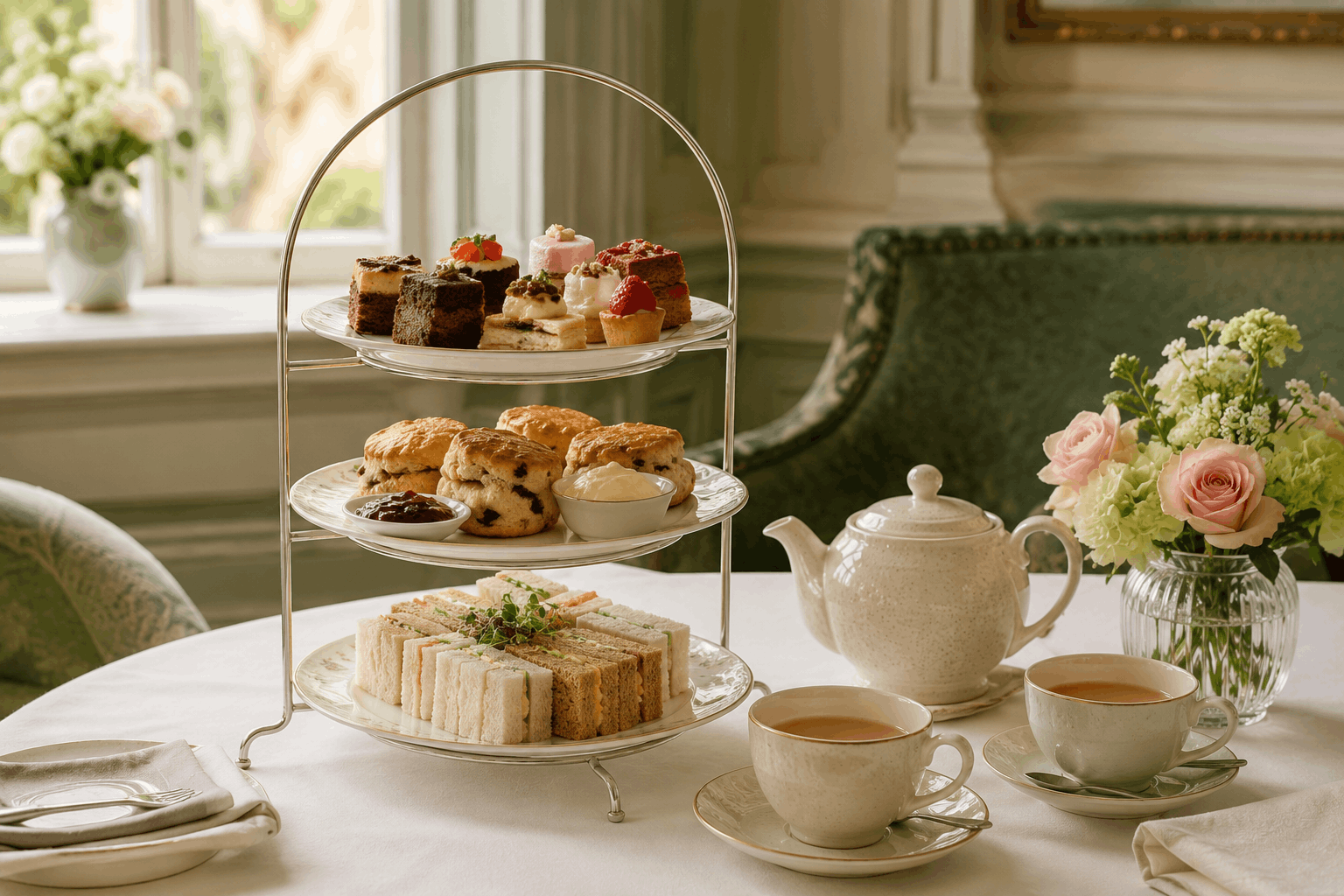
Afternoon tea is a light British meal traditionally served between lunch and dinner. It brings together freshly brewed tea, small savoury sandwiches, warm scones and bite-sized cakes or pastries. Although the presentation can look formal, the occasion is meant to feel relaxed: a leisurely pause in the day, shared with good company.
The ritual has changed since it became fashionable in nineteenth-century Britain. Today, it may be enjoyed in a luxury hotel, a quiet tearoom, a garden or a dining room at home. This guide explains the history of afternoon tea, the traditional menu, correct eating order, etiquette, dress code and practical details for hosting it.
What Is Afternoon Tea?
Afternoon tea is both a refreshment and a social occasion. A classic service includes a pot of tea served with finger sandwiches, scones with clotted cream and jam, and a selection of sweets. The portions are deliberately small because this is not intended to replace dinner.
Its character comes from more than the food. Fine cups, a teapot, neat place settings and an unhurried pace turn a simple snack into a relaxed and elegant ritual. Modern versions can be casual, but the basic idea remains the same: guests take time to talk while enjoying several light courses.
Why the Tradition Remains Popular
The experience feels special without requiring the length or formality of a full dinner. It suits birthdays, anniversaries, family gatherings and quiet meetings between friends. The balance of savoury and sweet food also gives each guest variety without requiring a large meal.
The History of Afternoon Tea
The familiar story began in the early 1840s with Anna Maria Russell, the seventh Duchess of Bedford. Fashionable households often ate lunch around midday and dinner late in the evening. The Duchess reportedly asked for tea and a small bite during the long gap, then began inviting friends to join her.
It is more accurate to say that she helped popularise the custom than that she invented it alone. Tea parties had existed for generations, and British mealtimes were already changing. Her private refreshment simply became a fashionable social event. According to the UK Tea & Infusions Association’s social history, the practice had become widespread by the 1860s, when bread and butter, crustless sandwiches, scones and cakes were commonly presented on fine china.
What started in aristocratic drawing rooms gradually moved into tearooms, hotels and ordinary homes. Its presentation evolved, but its purpose remained familiar: it created a pleasant bridge between two main meals and offered space for conversation.
Afternoon Tea vs High Tea
The two names are often treated as interchangeable, but their original meanings are different. Afternoon tea was a light, elegant occasion associated with drawing rooms and low tables. High tea developed as a filling early-evening meal for working and farming households and was eaten at a dining table.
| Tradition | Usual time | Typical food | Original setting |
| Afternoon tea | About 3-5 pm | Finger sandwiches, scones, cakes and pastries | Drawing room, tearoom or hotel lounge |
| High tea | About 5-7 p.m. | Bread, meat, pies, eggs or another substantial hot dish | Family dining table after work |
| Cream tea | Afternoon | Tea, scones, clotted cream and jam | Café, tearoom or home |
The UK Tea & Infusions Association describes high tea as the main meal of the day, combining hot tea with hearty food. That history explains why calling a luxurious hotel service “high tea” is traditional in some countries but technically different from the British meaning.
What Time Is Afternoon Tea Served?
The usual time is between 3 and 5 p.m., although hotels may accept bookings from around noon until early evening. A home gathering often begins at 3:30 or 4 p.m. Traditional service is meant to fill the late-afternoon gap without spoiling dinner.
Most experiences last about 90 minutes to two hours. A formal venue may set a time limit, while a gathering at home can continue as long as the host and guests prefer.
How Afternoon Tea Works
At a hotel or tearoom, a reservation is often sensible, especially at weekends. The guest is shown to a table, selects a tea and mentions any dietary requirements. The pot may arrive before the food or at the same time as a tiered stand.
Food is generally eaten from savoury to sweet: sandwiches first, scones second and pastries last. This order prevents rich desserts from overwhelming the subtler flavours at the beginning. It is a convention rather than a test, so good company matters more than perfect technique.
What Is Included in a Traditional Afternoon Tea Menu?
A three-tier stand is the best-known presentation, although plates and boards work equally well. The tiers normally move from savouries at the bottom to sweets at the top.
Bottom Tier: Finger Sandwiches and Savouries
Traditional fillings include cucumber with butter or cream cheese, egg mayonnaise with cress, smoked salmon, and ham with mustard. Bread should be fresh, lightly filled and trimmed of its crusts. Small fingers or triangles keep each serving easy to handle.
Modern menus may add a miniature quiche, tartlet, sausage roll or savoury choux bun. These additions should remain small enough to leave room for the following courses.
Middle Tier: Scones
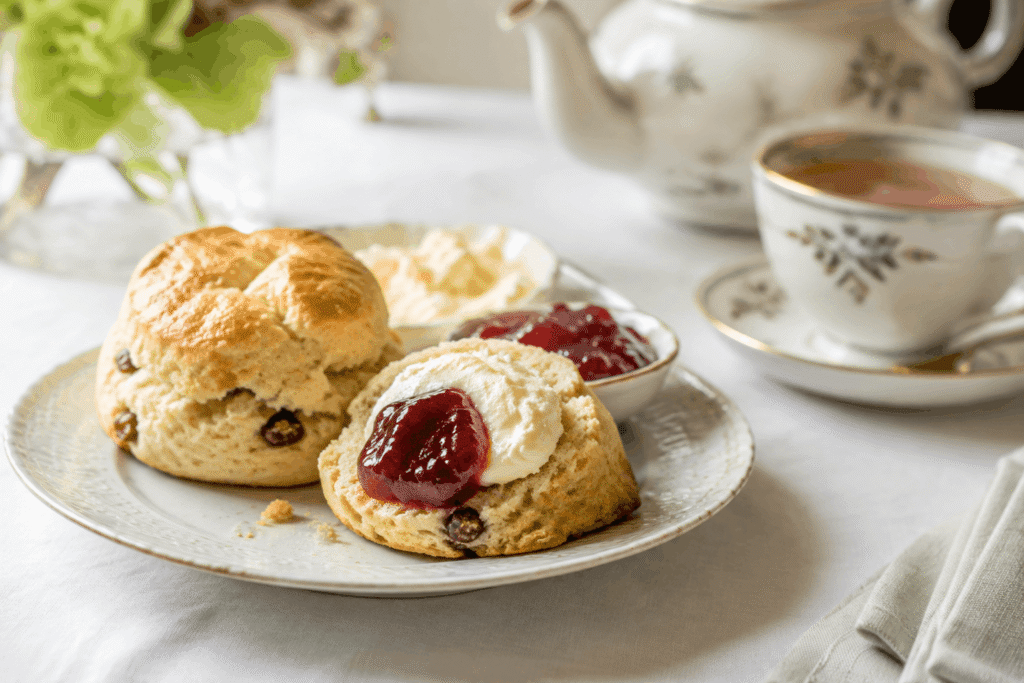
Plain or fruit scones form the heart of the menu. They should be tender, lightly golden and served warm rather than piping hot. Clotted cream and strawberry jam are the classic accompaniments, while lemon curd or another preserve can provide variety.
The Cornwall-versus-Devon debate concerns which topping goes first. Cornish custom favours jam followed by cream; Devon tradition favours cream followed by jam. Neither choice changes the pleasure of eating it.
Top Tier: Cakes, Pastries and Sweets
The final course may include miniature Victoria sponge, lemon drizzle cake, fruit tartlets, macarons, éclairs or shortbread. Two or three small choices are usually enough. The goal is variety and a polished appearance, not an oversized dessert buffet.
| Course | Useful portion per guest | Classic examples |
| Savouries | 3-4 pieces | Cucumber, egg and cress, salmon, ham and mustard |
| Scones | 1-2 small scones | Plain or fruit, served with cream and jam |
| Sweets | 2-3 pieces | Sponge cake, tartlet, éclair, macaron or biscuit |
Choosing the Right Tea
Black teas remain the most common partners for the menu. English Breakfast has enough body for sandwiches and rich cakes, while Earl Grey brings a citrus fragrance. Darjeeling is lighter and more delicate, and Assam has a malty character that works well with milk.
Green tea can accompany cucumber, herbs and lighter pastries. White tea suits subtle flavours, while peppermint, chamomile, rooibos and fruit infusions provide alternatives for guests who prefer something different. A host does not need a long menu; one dependable black blend and one lighter option are normally sufficient.
Loose leaves need enough room to open, and every variety should be brewed according to its own temperature and steeping time. Fresh pots are preferable to tea left sitting until it becomes strong or bitter.
Afternoon Tea Etiquette
Etiquette should make the occasion comfortable, not intimidating. A few simple habits preserve the graceful atmosphere.
Cups, Saucers and Spoons
At a dining table, the saucer stays down while the cup is lifted. At a low lounge table, both cup and saucer may be raised together. The handle is held gently without extending the little finger. Tea is stirred quietly with a small back-and-forth motion, after which the spoon rests on the saucer.
Milk, lemon and sugar are matters of taste. Lemon and milk should not be combined because the acidity can curdle the milk. When a host is pouring, the guest can state a preference politely instead of reaching across the table.
Eating Sandwiches, Scones and Pastries
Finger sandwiches are meant to be eaten by hand. A cake fork is suitable for soft or layered pastries. Scones are broken gently rather than sliced through like bread. A little jam and cream is placed on the side of the plate, then spread onto bite-sized pieces.
These practices align with Debrett’s afternoon tea guidance, which also recommends avoiding noisy stirring, clinking and slurping. The most important rule is consideration: a relaxed guest with good table manners contributes more than someone worried about every movement.
The Napkin and Eating Order
The folded napkin rests on the lap after everyone is seated. If a guest briefly leaves the table, it can be placed on the chair; at the end, it is left loosely beside the plate. Food proceeds from savoury to sweet, but nobody needs to race through the tiers. The occasion is deliberately leisurely.
What to Wear to Afternoon Tea
Most tearooms and hotels favour smart-casual clothing. A polished dress, skirt, tailored trousers, collared shirt, blouse or neat knitwear generally works well. Clean, understated shoes complete the look.
Prestigious hotels may prohibit sportswear, beachwear, ripped clothing or flip-flops, so the venue’s current dress code should be checked before arrival. Hats and gloves are optional unless an event specifically requests them. At home, the host can make the gathering as relaxed or elegant as the occasion requires.
How to Host Afternoon Tea at Home
A successful gathering depends more on planning than expensive china. The host can choose a date, invite guests and ask about allergies or dietary needs well in advance. A start time around 3:30 p.m. leaves enough space after lunch.
Essential Equipment
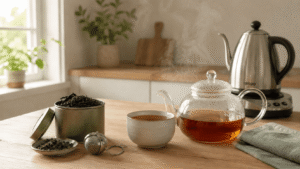
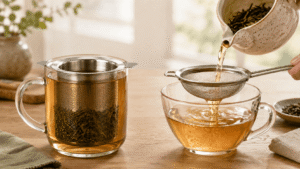
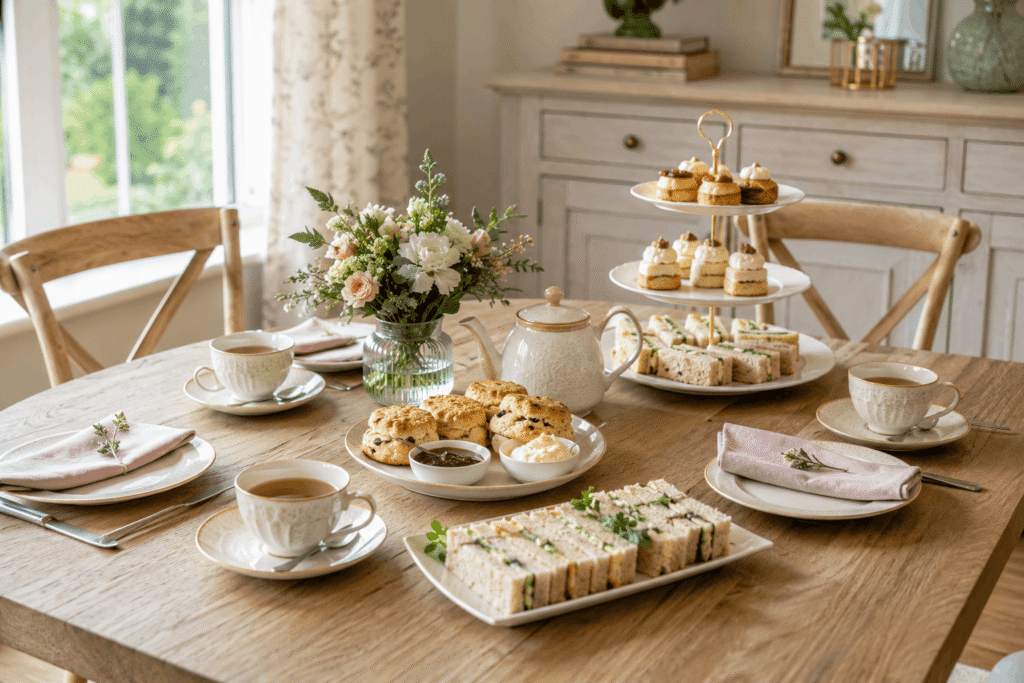
A teapot, kettle, cups, saucers, teaspoons, small plates, napkins and serving dishes cover the basics. A strainer is needed when loose leaves float freely in the pot. A tiered stand looks traditional, but separate platters are completely acceptable.
Planning and Preparing the Menu
Three or four savouries, one or two small scones and two sweets per person create a generous spread. Cakes, fillings and curds can often be prepared a day early. Sandwiches are best assembled close to serving time and covered so the bread stays soft. Scones taste freshest on the day.
Debrett’s hosting guidance makes a reassuring point: excellent hot tea and neatly prepared simple food matter more than an elaborate display. Fresh pots should be made when needed instead of allowing one batch to stew.
Setting the Table
Each place needs a cup and saucer, teaspoon, small plate and napkin. Milk, sugar, lemon slices, jam and cream should be reachable without crowding the table. Fresh flowers can add colour, but low arrangements are better because guests should be able to see one another.
Dietary alternatives should be labelled or served separately to prevent confusion. Vegetarian fillings, plant-based cakes and gluten-free items can follow the same small, attractive format as the traditional menu.
Modern Afternoon Tea Variations
The format is flexible enough for many occasions. A children’s version may feature familiar sandwiches and small decorated biscuits. Seasonal menus can use spring flowers, summer berries, autumn spices or festive winter flavours. Vegetarian, vegan and gluten-free versions replace ingredients without changing the three-course structure.
Some venues offer Champagne afternoon tea, while themed services draw inspiration from literature, fashion or local history. These interpretations keep the ritual lively while preserving its social, unhurried character.
Where to Experience Afternoon Tea
Luxury hotels usually provide the most formal service, often with live music and carefully designed pastries. Independent tearooms tend to feel quieter and more traditional, while cafés and restaurants may offer creative or lower-cost versions.
Before booking, a guest should review the menu, price, dress code, accessibility, dietary options and cancellation terms. Recent photographs can help show whether the setting and portion size match the occasion.
Frequently Asked Questions
What is afternoon tea?
It is a light mid-afternoon meal of brewed tea, small sandwiches, scones with cream and jam, and miniature cakes or pastries. It also serves as a relaxed social gathering.
What is the difference between afternoon tea and high tea?
Traditional afternoon tea is a delicate refreshment between lunch and dinner. High tea is historically a substantial early-evening meal containing hearty savoury food as well as a hot drink.
What time does afternoon tea start?
It is commonly served from 3 to 5 p.m. Hotels may offer earlier sittings, while home parties often begin at about 3:30 or 4 p.m.
How long does it last?
Most sittings take between 90 minutes and two hours. A venue may specify a limit when confirming the reservation.
What should a guest wear?
Smart-casual dress is appropriate in most places. Formal hotels may have stricter rules, so checking their policy beforehand prevents an awkward arrival.
Is the bottom tier eaten first?
Yes. The usual progression is sandwiches and savouries, followed by scones, then cakes and pastries. The stand itself does not dictate manners if a venue arranges its tiers differently.
Does jam or clotted cream go first?
Both are acceptable. Cornwall traditionally places jam first, while Devon places cream first. Practicality and personal preference can settle the question elsewhere.
Can the food be prepared in advance?
Many cakes, fillings and condiments can be made the previous day. Sandwiches should be assembled shortly before guests arrive, and freshly baked scones are best prepared on the day.
Is it suitable for children?
Yes. Smaller portions, familiar fillings and a shorter sitting can make the experience enjoyable for younger guests. Hot pots should remain safely beyond their reach.
Final Thoughts
Afternoon tea turns simple food and drink into a thoughtful occasion. Its history gives the ritual character, but hospitality gives it meaning. Whether it is served in a grand hotel or at a kitchen table, warm scones, fresh tea and time for conversation are the details that matter most.
Sources for Fact-Checking and Credit